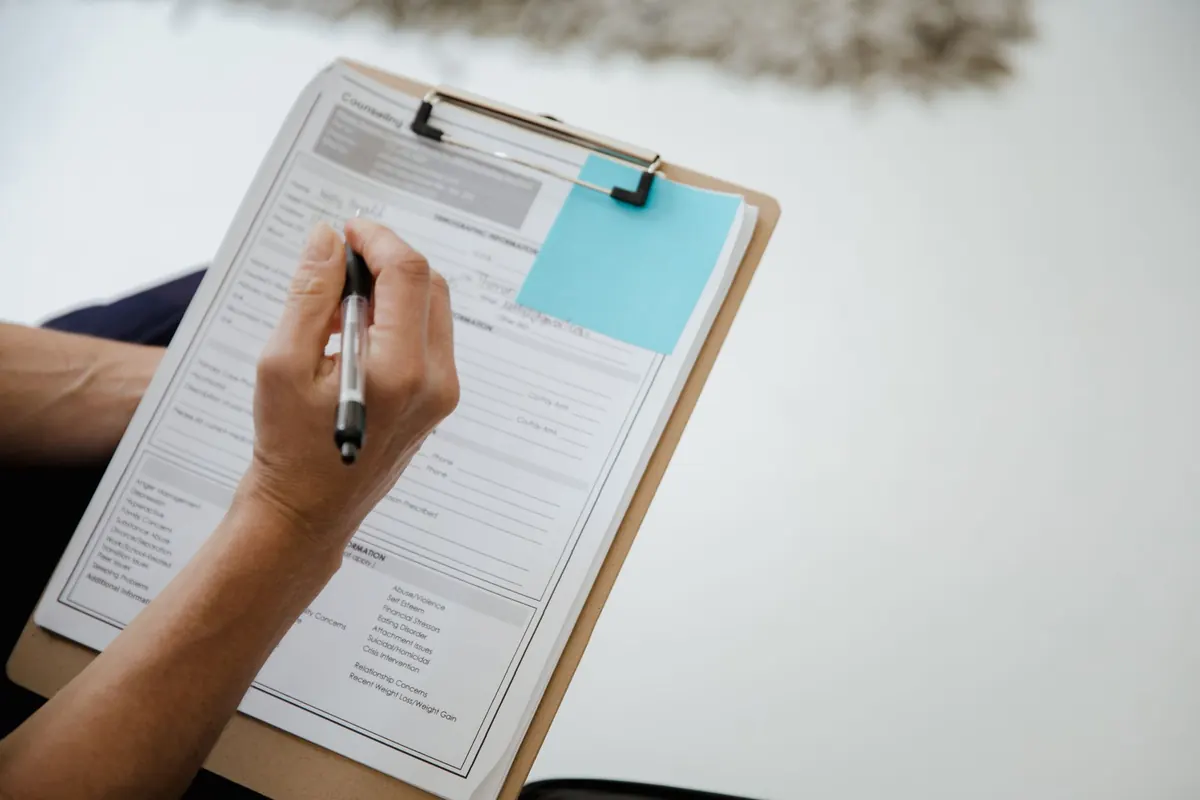
Most people take notes the way they were taught at school: write down what the teacher says, hope it sticks, move on. It works well enough when the stakes are low. Then you sit an exam, chair a meeting, or try to remember what a client asked for three weeks ago, and the notebook lets you down. The problem is rarely effort. It is method. Here are ten habits that quietly sabotage notes, and what to do instead.
1. Transcribing instead of thinking
Writing every word feels productive, but it turns you into a human tape recorder. Your hand is busy while your brain is idle, so nothing is actually being processed. The notes end up long, dense and almost impossible to revise from.
The fix: aim to capture ideas, not sentences. Before you write anything, ask what the point is. If a lecturer spends four minutes explaining one concept, one or two lines should hold it. Try writing in your own words as you go. If you cannot rephrase it, you probably have not understood it yet, and that is useful information.
2. Never reviewing what you wrote
Notes written and never opened again are just expensive scribbling. Review is where the actual learning happens, and it takes far less time than people assume.
The fix: build two short reviews into your routine. The first is same-day: ten minutes in the evening to tidy, fill gaps and highlight the two or three things that mattered. The second is spaced: revisit that page after a week, then a month. Ten minutes twice beats three hours the night before.
3. Using one system for everything
A shopping list, a project brief and a lecture on economics do not belong in the same format. When everything looks the same, nothing stands out and searching becomes guesswork.
The fix: match the format to the job.
- Meetings: decisions, actions, owners, dates. Nothing else.
- Lectures and talks: concept, explanation, example, question.
- Books: one page per chapter, in your own words.
- Ideas: a single running inbox you review weekly.
4. Leaving no clue why the note matters
You write "revenue up 12 per cent" and six months later you cannot remember whether that was good news, a warning, or a figure someone disputed. Facts without context age badly.
The fix: add a short "so what" line to anything important. One sentence is plenty: This is why we are pausing the second launch. Your future self will thank you, and so will anyone who inherits your notes.
5. Writing on whatever is nearest
Notes scattered across three notebooks, a phone app, the back of an envelope and two email drafts are effectively lost. The information exists, but you cannot find it when it counts.
Getting to one place
Pick a single home for notes and commit to it for at least three months. Digital suits people who search and edit; paper suits people who think better with a pen. Either works. What fails is the halfway house where you keep meaning to consolidate and never do.
The fix: if you genuinely need both, use paper for thinking and digital for keeping. At the end of each day, spend five minutes moving anything worth keeping into the main system.
6. Formatting for beauty instead of speed
Colour-coded headers, perfect handwriting and elaborate diagrams look impressive, but they slow you down and often hide the fact that the content is thin. A page you never finish is less useful than a messy one you do.
The fix: keep a simple, repeatable structure you can apply without thinking. A date, a title, a few headings, and a marker for anything that needs action. Save the tidying for the same-day review, when you are no longer racing the speaker.
7. Copying without questioning
Not everything said in a meeting or lecture is worth keeping. Opinions get recorded as facts, tangents get written down as decisions, and the signal drowns in the noise.
The fix: mark your notes as you go. A question mark for anything unclear, an asterisk for anything you doubt, and a clear label for what is a decision versus what is a suggestion. Then follow up. Half of good note-taking is knowing what to check later.
8. Making notes unsearchable
Weeks later, what you remember is the topic, not the page number. If your notes have no titles, dates or tags, finding them again means flicking through everything.
The fix: apply three habits without exception:
- Date every entry, even in a rough notebook.
- Give each page a plain, descriptive title, such as "Client call – pricing concerns".
- Tag by project, person or theme if you are working digitally.
It takes seconds and saves hours.
9. Capturing actions without owners or deadlines
"Someone should look into the supplier issue" is not an action. It is a wish. Notes full of these create the illusion of progress while nothing actually moves.
The fix: write actions as a verb, a name and a date: Priya to send revised quote by Thursday. If the owner is not in the room, note who will chase it and when. Review that list at the start of the next meeting rather than at the end, when everyone is packing up.
10. Treating notes as a record rather than a tool
The biggest mistake sits underneath all the others: assuming the point of notes is to have them. Notes are raw material for thinking, writing, deciding and remembering. A page that has never been used has not done its job.
The fix: give every set of notes a purpose. Before you start, decide what you will do with it: revise it, turn it into a summary, send it to a colleague, or use it to plan the next step. Then do that thing within a week. Notes that are read, edited and applied are the ones that pay you back.
Where to start this week
Do not try to fix all ten at once. Pick the two mistakes that cost you the most, and change only those. For most people, that means shortening the notes and reviewing them the same day. Do that for a fortnight and the difference is obvious: pages you can actually read, and information you can actually find.
If your notes relate to health, money or legal matters, keep them factual and dated, and check anything important with a qualified professional before acting on it.
Then build from there. Add a "so what" line to your next meeting notes. Give tomorrow's page a proper title. Set a ten-minute review in your calendar for tonight. Small, dull habits beat ambitious systems every time, because you will still be doing them next month.
Photo: stempow / Pixabay